A Beautiful Website Isn’t Enough: How I Build Lead-Generating Websites with WordPress and Elementor
In today’s digital landscape, having a website is no longer enough. Even having a beautiful website isn’t enough.
I’ve seen businesses invest thousands of dollars into stunning designs only to wonder why they aren’t getting inquiries, leads, or sales.
The truth is simple: a website should do more than look good—it should work as a business asset.
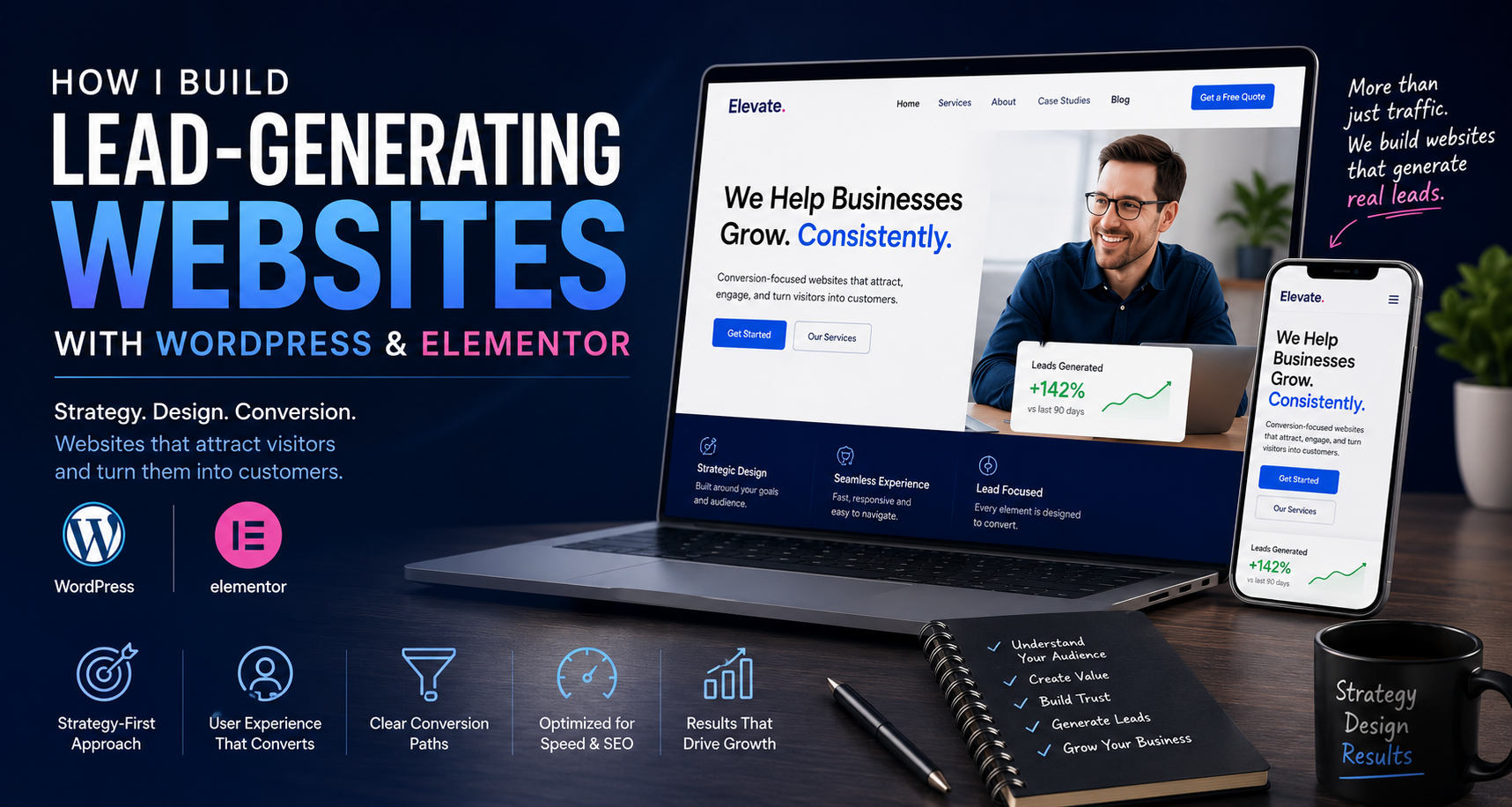
Over the years, I’ve built websites for entrepreneurs, startups, coaches, service providers, and established companies using WordPress and Elementor. While every project is different, my goal remains the same: create websites that attract visitors, build trust, and convert prospects into customers.
Here’s the process I use to build lead-generating websites that deliver measurable results.
1. I Start with Strategy, Not Design
Most website projects begin with colors, fonts, and layouts.
I begin with questions.
Before opening WordPress or Elementor, I take time to understand:
- Who is the target audience?
- What problem does the business solve?
- What action should visitors take?
- What makes the company different from competitors?
Without clear answers to these questions, even the most beautiful website can fail.
Every successful website starts with a strategy that aligns with business goals.
2. I Build for User Experience First
Visitors decide within seconds whether they’ll stay on a website or leave.
That’s why I focus heavily on user experience.
When designing a website, I ensure that:
- Navigation is simple and intuitive
- Important information is easy to find
- Pages load quickly
- Mobile responsiveness is flawless
- Calls-to-action are visible and compelling
A visitor should never have to guess where to click next.
Good user experience creates trust, and trust creates conversions.
3. I Create Clear Conversion Paths
Many websites suffer from a common problem: they don’t guide visitors toward taking action.
A lead-generating website should make the next step obvious.
Depending on the business, that action could be:
- Booking a consultation
- Requesting a quote
- Filling out a contact form
- Scheduling a demo
- Making a purchase
Every page should have a purpose and a clear call-to-action.
I strategically place conversion opportunities throughout the website so visitors always know what to do next.
4. I Use Elementor to Build Flexible, High-Converting Designs
One of the reasons I continue to use Elementor is its flexibility.
Elementor allows me to create custom layouts without sacrificing speed, functionality, or scalability.
Some of the advantages include:
- Faster development time
- Complete design freedom
- Responsive controls for every device
- Easy client management after launch
- Integration with marketing tools and CRMs
For business owners, this means getting a professional website that’s easier to maintain and update without depending on a developer for every small change.
5. I Optimize for SEO from Day One
A website cannot generate leads if nobody can find it.
Search engine optimization isn’t something I add later—it’s part of the foundation.
When building websites, I focus on:
- Proper heading structure
- Optimized page titles and meta descriptions
- Fast-loading pages
- Image optimization
- Internal linking
- Mobile-first performance
- Clean URL structures
These practices help improve visibility in search engines and create a better experience for users.
6. I Prioritize Website Speed and Performance
Studies consistently show that slow websites lose visitors.
Performance is one of the most overlooked conversion factors.
To maximize speed, I implement:
- Image compression
- Caching solutions
- Lightweight themes
- Optimized plugins
- Core Web Vitals best practices
A fast website doesn’t just improve rankings—it improves user satisfaction and conversion rates.
7. I Measure What Matters
Launching a website isn’t the finish line.
It’s the beginning.
I believe every website should be connected to data that helps businesses make informed decisions.
That’s why I recommend tracking:
- Traffic sources
- Visitor behavior
- Conversion rates
- Landing page performance
- Lead generation metrics
Tools such as Google Analytics, Google Search Console, and heat mapping software provide valuable insights that help improve results over time.
The Real Goal: Turning Visitors into Customers
The purpose of a website isn’t simply to exist online.
It’s to support business growth.
A successful website should:
- Attract the right audience
- Build credibility
- Communicate value clearly
- Generate qualified leads
- Convert prospects into paying customers
This is why I approach every WordPress and Elementor project with both design and business objectives in mind.
Because at the end of the day, the most beautiful website in the world means very little if it doesn’t help a business grow.
Final Thoughts
WordPress and Elementor remain one of the most powerful combinations for building modern business websites.
When used strategically, they provide the flexibility, scalability, and performance needed to create websites that not only look professional but also generate real results.
The businesses that win online aren’t always the ones with the flashiest websites.
They’re the ones with websites that understand their audience, communicate effectively, and consistently convert visitors into customers.
That’s the standard I strive for every time I build a website.