For over two decades, the digital landscape has shifted dramatically, yet one constant remains at the foundation of the web. As we look ahead to 2026, the question is often asked: “Is WordPress still relevant?”
The answer isn’t just a simple yes; the argument for WordPress in 2026 is stronger than ever. The platform has transcended its origins as blogging software to become the versatile, secure, and enterprise-ready operating system for the modern internet.
Here is why WordPress remains the definitive choice for businesses, creators, and developers navigating the digital landscape of 2026.
1. The Headless Revolution: WordPress as an API
By 2026, decoupled or “headless” architecture is the standard for high-performance enterprise sites. WordPress is no longer just a rigid coupled system. Its robust REST API and native GraphQL support have made it the preferred content source for modern frontend frameworks like Next.js, Nuxt, and SvelteKit.
Developers love the flexibility to build blazing-fast, app-like experiences, while content editors retain the familiar, powerful Gutenberg writing interface they trust. This hybrid capability bridges the gap between developer requirements and user experience.
2. Democratizing AI: Intelligence Built-In
In 2026, AI is not an optional plug-in; it’s an integrated workflow. WordPress has intelligently integrated artificial intelligence directly into its core core. The Gutenberg editor now includes native, context-aware AI tools for content generation, image creation, real-time SEO suggestions, and even automated layout building. This democratization ensures that small businesses, not just giant corporations, can leverage advanced AI to scale their content efforts.
3. The Ultimate No-Code & Low-Code Platform
The distinction between a developer and a user has blurred. WordPress’s Full Site Editing (FSE) has matured into a seamless design experience. Users can visually construct every element of their site—from the global header to the functional footer—using intuitive blocks and global styles.
For agencies, this means faster development cycles. For small business owners, it offers unprecedented control over their brand identity without requiring deep technical knowledge. It is truly code-optional and design-first.
4. Performance at Scale and ‘Core Web Vitals’
Historically critiqued for its speed, the performance optimization work done on WordPress core between 2023 and 2026 has been monumental. Core WordPress is now lighter and faster. When paired with modern hosting environments and automatic optimizations for Core Web Vitals, WordPress easily meets the demanding speed and usability standards set by modern search engines, achieving near-perfect lighthouse scores right out of the box.
5. Security Through Community and Maturity
Security is paramount in 2026. While its popularity makes WordPress a target, its global, mature community is its greatest defense. The dedicated security team, automated core updates, and standardized security protocols mean vulnerabilities are patched faster than any proprietary competitor. When correctly managed on managed WordPress hosting, the platform offers enterprise-grade security that rivals closed-source alternatives.
Conclusion: The Resilient Choice
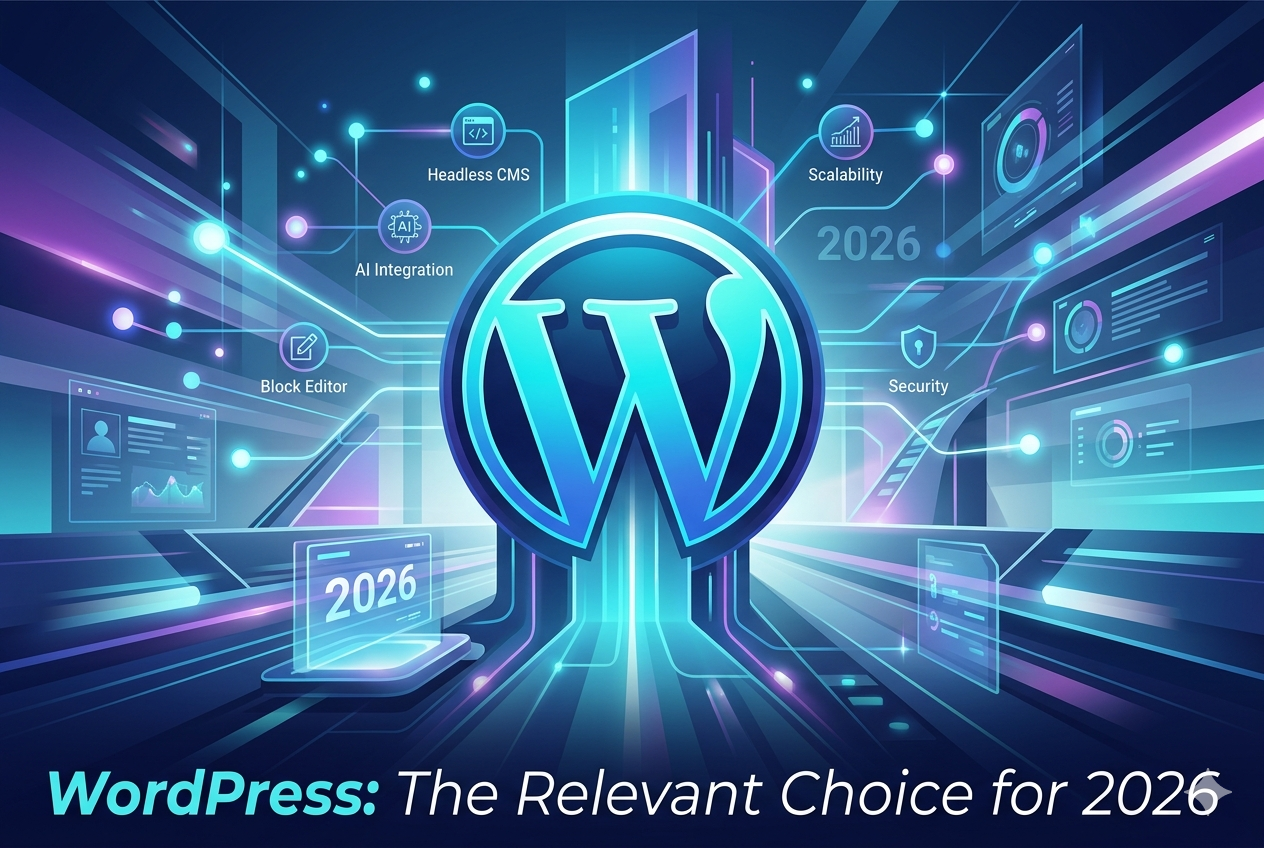
The visual web of 2026 is complex—faster, smarter, and more integrated. While novel platforms arrive every year, none can match the ecosystem, flexibility, and mature foundation of WordPress. By perfectly balancing modern developer needs (Headless, AI, FSE) with accessibility, WordPress proves it is not just surviving; it is defining the standard for the web in 2026.
Choosing WordPress in 2026 isn’t the conservative choice; it’s the strategic one for a resilient, scalable digital future.